
Affiliate Disclosure:This post may contain affiliate links, which means I may earn a small commission from qualifying purchases at no extra cost to you.
When you are in the final weeks of pregnancy, the nesting instinct hits hard. Suddenly, you feel an overwhelming urge to clean every baseboard, organize nursery drawers by size, and wash every single piece of fabric your newborn might touch.
But as you look at the piles of tiny clothes, swaddles, plush blankets, and car seat inserts, it is easy to feel overwhelmed. Do you really need to wash everything? What temperature should you use? And what about gear covers? I am breaking down the realistic newborn laundry rules. Here is the first half of what to wash before your baby arrives home.
The Core Items to Wash Before Your Due Date
1. Newborn and 0-3 Month Clothing (The Wardrobe Baseline)
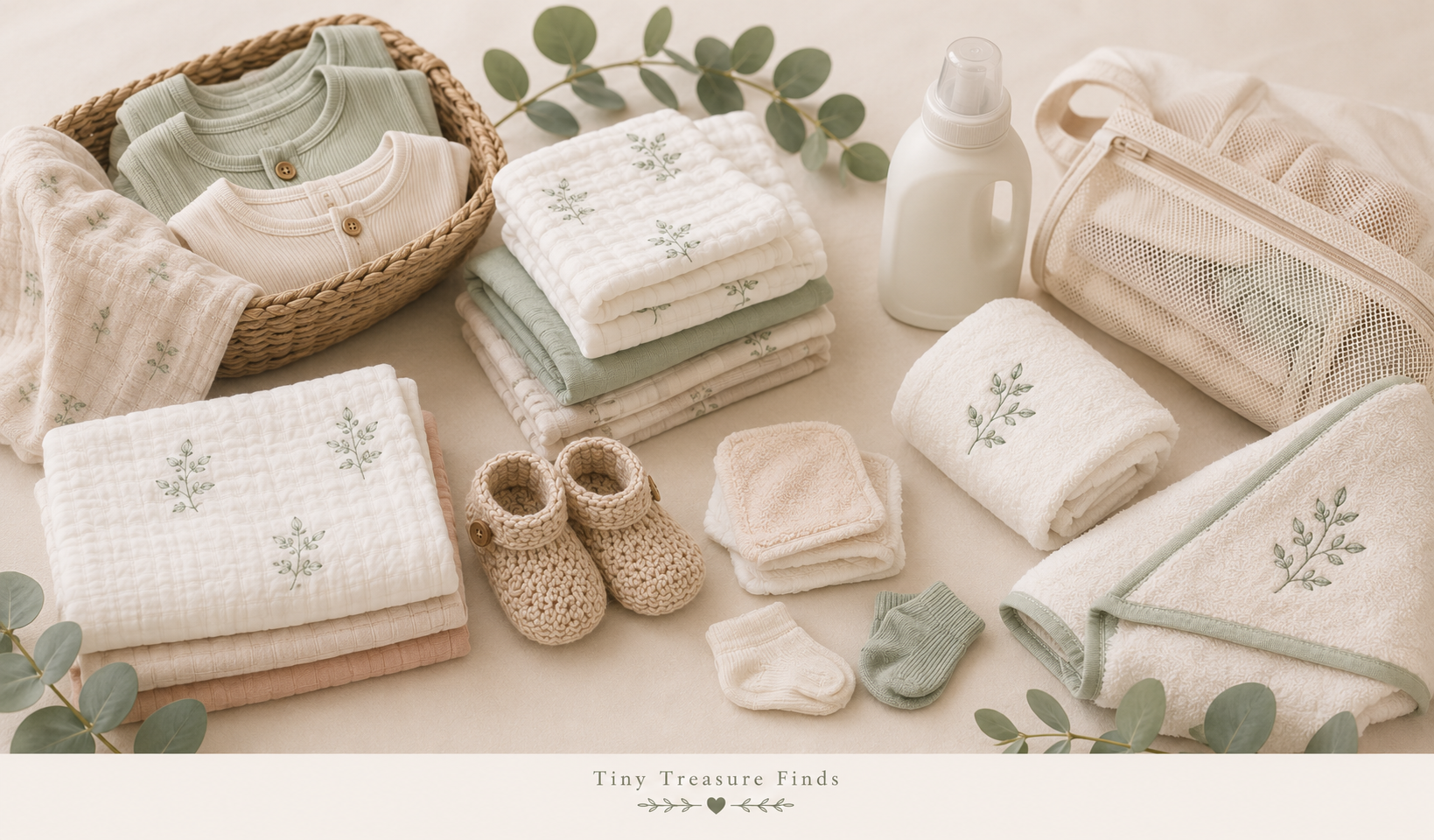
Every single piece of clothing that will touch your newborn’s skin must be washed before use. Brand-new clothes are often treated with chemical finishing agents, starches, and anti-wrinkle sprays during manufacturing to make them look stiff and pristine on retail hangers. These chemicals can easily trigger severe contact dermatitis or eczema on delicate infant skin. Focus strictly on your newborn and 0-3 month sizes first; you can wash larger sizes later as your baby grows.
- What to include: Onesies, sleep-and-plays, bodysuits, scratch mittens, socks, and hats.
- Top Popular Picks: Dreft Stage 1: Newborn Liquid Detergent, All Free Clear Liquid Detergent, or Honest Company Baby Detergent.
Streamline your entire nesting workflow. Grab the print-at-home First-Time Mom Checklist Bundle to track laundry tasks, nursery layouts, and hospital packing steps seamlessly.
2. Swaddles, Receiving Blankets, and Crib Sheets (The Bedding Layer)
Your baby will spend upwards of 16 hours a day pressed tightly against sleep surfaces, meaning bedding fabric requires a thorough wash. Laundering new sheets and muslin swaddles removes fabric lint, dust mites from warehouse storage, and shipping residues. Washing muslin and bamboo fabrics beforehand also makes them significantly softer and more flexible, allowing you to get a much tighter, more secure swaddle wrap on night one.
- What to include: Fitted bassinet sheets, crib sheets, muslin swaddle wraps, and receiving blankets.
- Top Popular Picks: KeaBabies Organic Muslin Swaddles, Burt’s Bees Baby Organic Crib Sheets, or HALO SleepSack Swaddle.
3. Washcloths and Hooded Towels (The Bath Time Essentials)
Bath items interact directly with open skin pores right after a warm bath, making fabric purity essential. New towels frequently contain residual chemical softeners applied by factories that actually reduce the fabric’s natural water absorbency. Washing your hooded towels and bamboo washcloths before the first bath strips away these artificial coatings, making the material instantly thicker, more plush, and drastically more absorbent.
- What to include: Terry cloth washcloths, muslin face wipes, and hooded baby towels.
- Top Popular Picks: KeaBabies Organic Bamboo Towels, Mukin Muslin Baby Washcloths, or HipHopShare Hooded Towels.
4. Burp Cloths and Fabric Bibs (The Feeding Station Stash)
Burp cloths spend hours draped over your shoulder, directly touching your baby’s face, mouth, and hands during vulnerable feeding windows. Because newborns frequently wipe their faces or rub their eyes against your clothes and burp cloths, ensuring these fabrics are completely free of harsh fragrances and chemical sizing is vital. Launder a large initial batch—you will go through far more than you think.
- What to include: Muslin burp cloths, cotton flannel cloths, and soft fabric drool bibs.
- Top Popular Picks: KeaBabies Organic Muslin Burp Cloths, Comfy Cubs 6-Pack Cotton Cloths, or Green Sprouts Waterproof Bibs.
5. Removable Stroller and Car Seat Fabric Inserts (The On-The-Go Layers)
Many parents forget that brand-new infant car seats and strollers have been sitting wrapped in plastic inside shipping warehouses for months. While you should never submerge or wash the structural safety harness straps (as water can degrade the flame-retardant fibers), you should absolutely remove the plush head supports, infant body inserts, and washable fabric linings. Laundering these removes manufacturing dust and chemical flame-retardant residues before they press against your baby’s neck and face during travel.
- What to include: Washable infant car seat head supports, stroller seat inserts, and fabric harness covers.
- Top Popular Picks: Ruvalino Universal Car Seat Liner, Skip Hop Stroller Liners, or Carseat Canopy Covers.
6. Plush Baby Toys and Fabric Books (The Sensory Items)
Newborns explore the world using their mouths, and any fabric toy or soft book will inevitably end up being chewed on. Before you tuck plush toys, rattle socks, or crinkle books into your nursery baskets, give them a gentle clean. If an item cannot go into the washing machine, place it inside a mesh laundry bag and run a delicate cycle, or hand-wash it using a small drop of your fragrance-free baby detergent.
- What to include: Soft rattle socks, fabric crinkle books, plush security blankets, and stuffed animals.
- Top Popular Picks: Lamaze Infant Sensory Toys, Manhattan Toy Soft Books, or Gund My First Teddy Bear.
7. Nursing Pillow Covers and Breast Pads (The Feeding Support)
If you plan to use an ergonomic nursing pillow or reusable fabric breast pads, these textiles will spend hours pressed against your skin and your baby’s face. Laundering the zip-off pillow covers and organic bamboo pads ensures that no starches or chemical treatments irritate your skin or transfer onto your newborn’s hands and mouth during marathon feeding sessions.
- What to include: Boppy or My Brest Friend zip-off covers and washable bamboo breast pads.
- Top Popular Picks: Boppy Original Nursing Pillow Covers, Organic Bamboo Washable Breast Pads by KeaBabies.
8. Your Own Shirts and Loungewear (The Secret Step)
This is the ultimate insider tip for expectant mothers: wash a few of your own comfy pajama sets, robes, and cotton t-shirts in the exact same gentle baby detergent. Your newborn will spend hours resting their bare cheeks directly against your chest for skin-to-skin contact, burping sessions, and contact naps. Washing your own postpartum loungewear prevents your standard adult laundry detergents or fabric softeners from irritating their highly sensitive skin.
- What to include: Cotton t-shirts, postpartum robes, button-down pajamas, and nursing tanks.
- Top Popular Picks: Ekouaer Button-Down Pajamas, Kindred Bravely Nursing Robes, or Amazon Essentials Cotton Tees.
Final Thoughts on Pre-Baby Laundry
Prepping your baby’s wardrobe doesn’t have to turn into an overwhelming chore. Focus entirely on washing your newborn and 0-3 month sizes around the 35 to 37-week mark of your pregnancy so everything is fresh and ready before your due date. Leave the larger clothing sizes tagged and stored away in closets; you can wash those later as your baby dynamically outgrows each stage. Keep your cycles gentle, skip the harsh fabric softeners, and enjoy these final, peaceful nesting moments!
Read Next:
Leave a Reply