
Disclosure: This post contains affiliate links. If you click through and make a purchase, I may earn a small commission at no additional cost to you. I only recommend products I genuinely use and love.
The transition from exclusive milk feedings to solid foods is one of the most exciting milestones of your baby’s first year. It marks the beautiful evolution from the survival-mode newborn weeks into a season of curiosity, flavor, and messy exploration.
But let’s be entirely honest, mama—it can also bring a massive wave of anxiety.
Between worrying about potential food allergens, deciphering gagging versus choking, and wondering how on earth to balance milk volumes with purées or finger foods, the mental load can feel incredibly heavy.
If you are currently staring at a high chair wondering how to take that very first step without the panic, take a deep breath. Here is a simple, stress-free framework to ease your mind and confidently navigate your baby’s first culinary adventures.
1. Watch for True Readiness Signs (Forget the Calendar)
While many pediatric guidelines mention the 4-to-6-month window, your baby’s biological readiness is far more important than a specific date on a calendar. Before placing that first piece of avocado on the tray, ensure your little one is securely supported in a supportive, wipe-clean seat like the Abiie Beyond Junior Convertible Wooden High Chair.
Once their seating setup is safe, look for these three developmental cues:
- Solid Trunk Control: Can your baby sit upright in a high chair with little to no slumping?
- The Disappearing Reflex: Has their tongue-thrust reflex faded? (If they instantly push all food straight out of their mouth with their tongue, their digestive runway isn’t quite ready).
- Hand-Eye Coordination: Are they actively reaching for your food, tracking your fork, and bringing toys cleanly to their mouth.
2. Managing the Milk Shift (The Transition Secret)
The biggest mistake first-time moms make during the weaning phase is assuming that solid foods instantly replace formula or breast milk.
In the beginning, food is strictly for sensory exploration, motor skill development, and texture practice. Your baby’s primary source of caloric nutrition will still come directly from their usual feeding schedule.
To ensure they don’t get frustrated at the high chair because they are overly hungry, always offer a standard milk feed roughly 30 to 60 minutes before sitting down for solids practice.
Tip: As you balance this shifting schedule, keeping a close eye on their daily fluid trends is vital to ensure their baseline nutrition stays steady. If you want a physical, paper-based chart to track daily milk intervals alongside diaper outputs during this confusing transitional week, you can grab our minimalist Daily Breastfeeding & Pumping Tracker Sheet.
3. Take the Fear Out of High-Risk Allergens
Allergen anxiety is completely normal. The current medical recommendation is to introduce common allergens early and often, rather than delaying them.
When introducing top allergens (like peanut butter, egg, or dairy), serve them in small, infant-safe dishes. We love using ergonomic silicone utensils because they stay firmly in place on the tray, like these First Spoon and Suction Bowl Sets.
To keep tracking completely accurate:
- Introduce only one new high-risk food at a time.
- Offer it in the morning or early afternoon so you have the entire day to monitor your baby’s skin and breathing.
- Keep the rest of their meals strictly filled with safe, previously tested ingredients for the next 48 hours to easily spot reactions.
To keep cleanup manageable during these initial, incredibly messy weeks, don’t forget to protect their clothes with a waterproof, deep-pocket Catch-All Silicone Baby Bib to catch those stray crumbs before they hit the floor.
🏆 Turn Weaning Into a Stress-Free Celebration
Introducing solids doesn’t have to be a source of daily mental guesswork. You don’t need a complicated tracking app that keeps you glued to a bright phone screen in the kitchen.
To celebrate this beautiful milestone and keep your peace of mind completely intact, we built a stunning, 2-page fridge keepsake pack specifically for this transition.
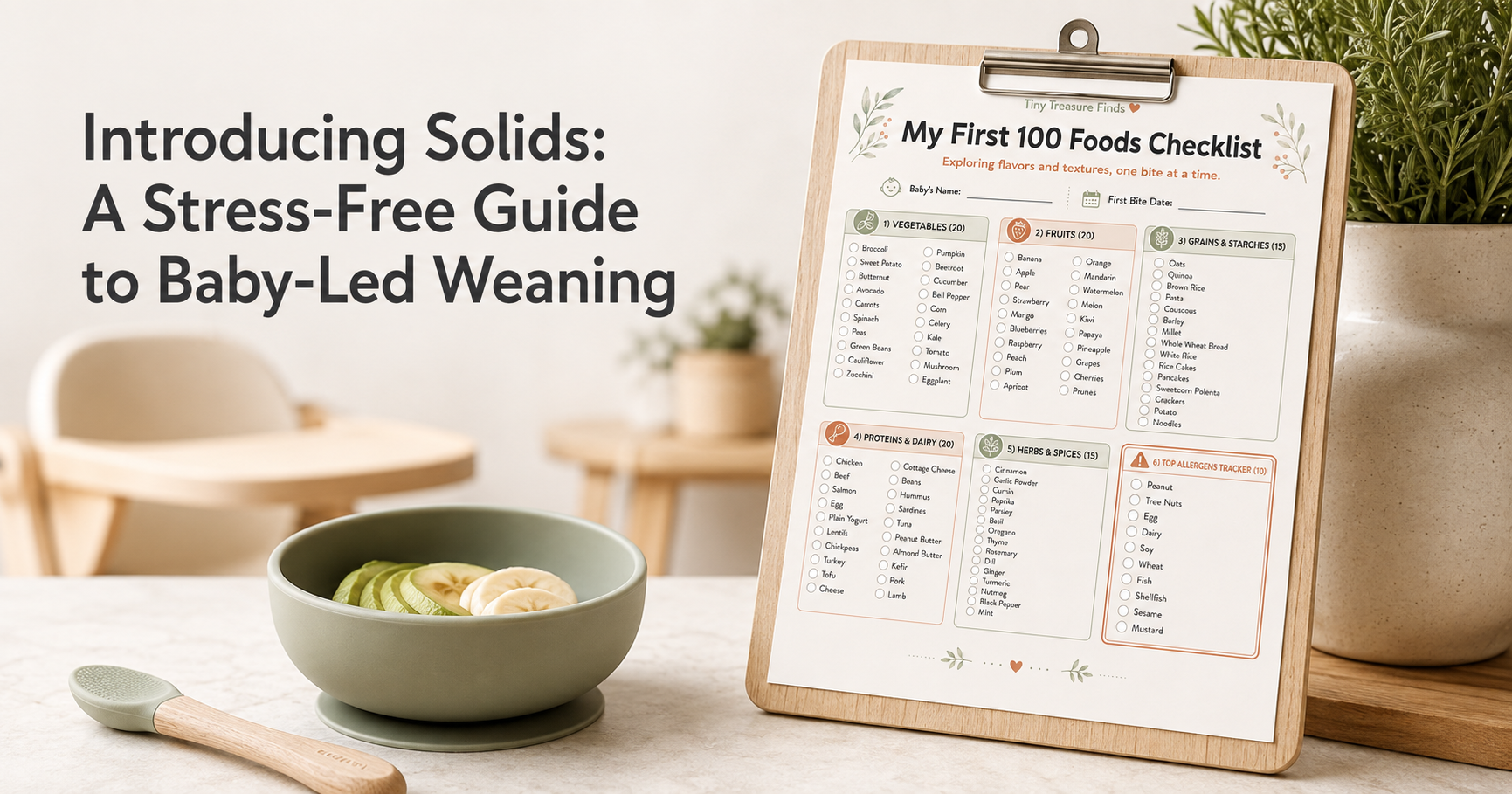
Our First 100 Foods Tracker Pack features the viral “100 Foods Before One” milestone checklist to track wholesome vegetables, fruits, and starches on your fridge, alongside a clean, structured Daily Food Reaction Log to safely note preparation methods, allergen responses, and pediatrician notes.
Grab the First 100 Foods Tracker Pack and turn mealtime into a calm, beautiful adventure!
Leave a Reply