
Disclosure: This post contains affiliate links. If you click through and make a purchase, I may earn a small commission at no additional cost to you. I only recommend products I genuinely use and love.
If your once-peaceful newborn suddenly treats bedtime like a battlefield and wakes up every 45 minutes looking for a party, welcome to the 16-week mark.
The 4-month sleep regression is structurally one of the toughest developmental shifts in your entire motherhood journey. It isn’t a medical issue or a sign that you are doing something wrong. It is actually a brilliant neurological permanent leap: your baby’s brain is transitioning from newborn sleep patterns into adult-like light and deep sleep cycles.
While you cannot avoid this biological shift completely, you can manage the exhausting chaos by mastering a simple tool: Awake Windows.
Here is how to spot overtired cues, handle daytime nap transitions, and preserve your own mental sanity on zero sleep.
1. The Magic 4-Month Timing (90 to 120 Minutes)
At 4 months old, a baby’s optimal awake window is typically between 1.5 to 2 hours maximum. Pushing past this window causes their system to produce cortisol and adrenaline, making it twice as hard for them to settle into a deep sleep cycle.
Instead of watching the clock exclusively, look for these changing physical tired cues:
- The Early Stage (Time to soothe): Staring into space, losing interest in toys, or rubbing eyes.
- The Overtired Stage (The danger zone): Pulling at ears, arched backs, and high-pitched crying.
2. Rule Out Comfort vs. Sleep Cycles
When your little one wakes up crying 45 minutes after you lay them down, it is usually because they cannot transition past their initial light sleep phase.
Before assuming they are permanently wide awake, rule out physical comfort boundaries. Ensure your nursery environment is perfectly optimized. We highly recommend using a breathable, weighted cotton sleep sack like the Premium Nested Bean Zen Sack and a crystal-clear, white-noise sound machine like the Hatch Rest Baby Sound Machine to mimic the comforting continuous background hum of the womb.
Tip: During this confusing shift, it is also highly common for babies to hit a massive physical growth spurt. Keeping an accurate log of their fluid intervals ensures they are waking up from a developmental sleep shift rather than true hunger. If you need a physical, paper-based grid to track daily milk amounts alongside changing sleep windows, you can grab our minimalist Daily Breastfeeding & Pumping Tracker Sheet.
🏆 Bring Structure Back to Your Nursery Routine
Surviving the 4-month sleep regression requires consistency and a clear, easy-to-use logging tool. You don’t want to navigate a blinding, bright phone app that logs dozens of unnecessary data points in the dark.
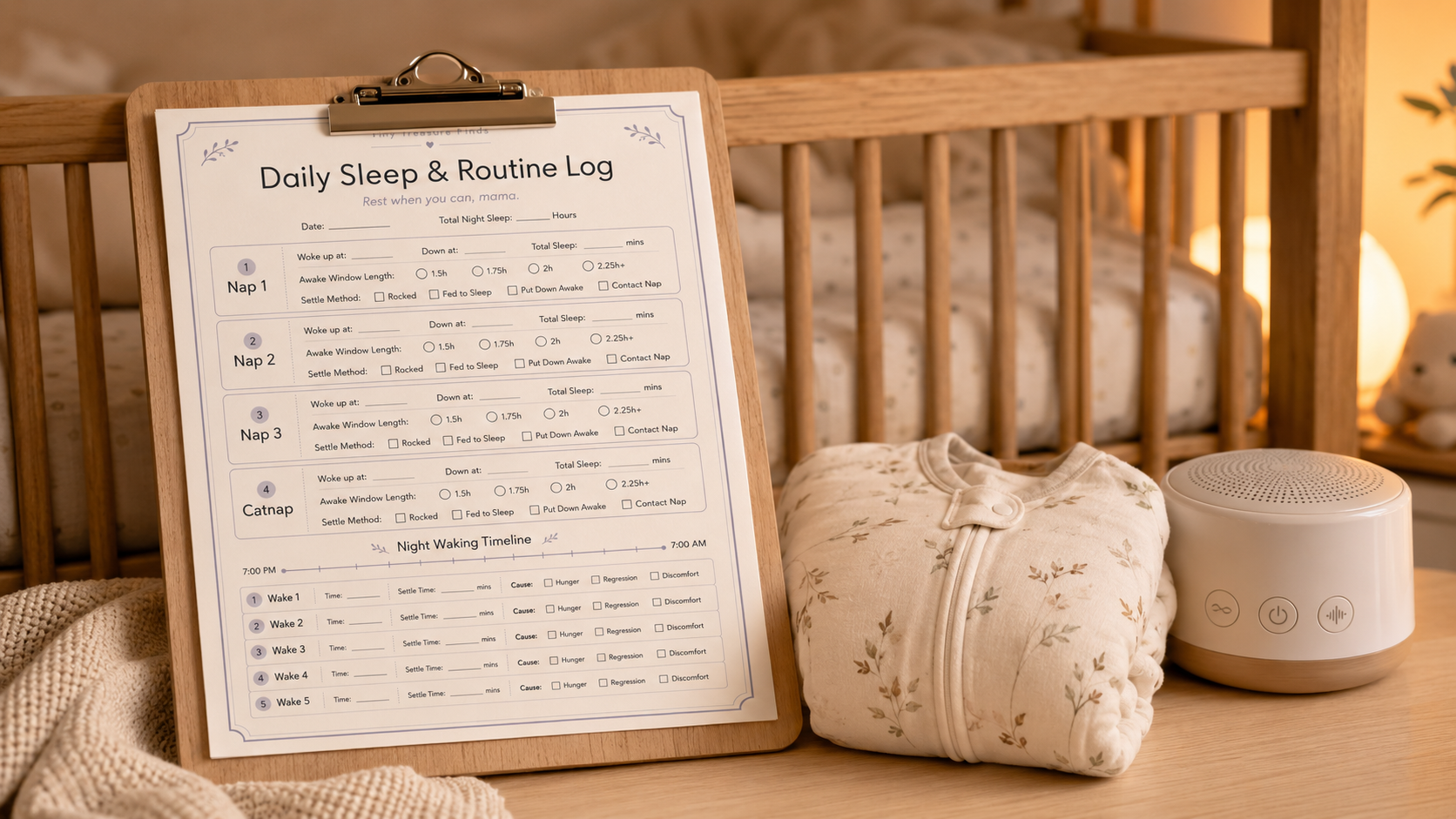
To help you manage awake lengths and nap shifts cleanly, we built The Sleep Regression & Routine Log.
This printable, minimalist tracking chart is specifically engineered to handle the 4-to-3 nap transition phase. It allows you to track awake windows, evening bedtime durations, morning wake-up metrics, and settling notes with a simple checkbox matrix that requires zero midnight writing.
Grab the Sleep Regression & Routine Log and reclaim your peaceful evening routine!
Leave a Reply